Project · active
VRchaeology
An immersive virtual field school for learning archaeological field methods through excavation, mapping, documentation, and analysis.
Drag a model to rotate it. Click for availability.
When the headset is focused, use arrow keys to rotate, keys 1, 2 and 3 to select the headset or a controller, and Home to reset the selected part.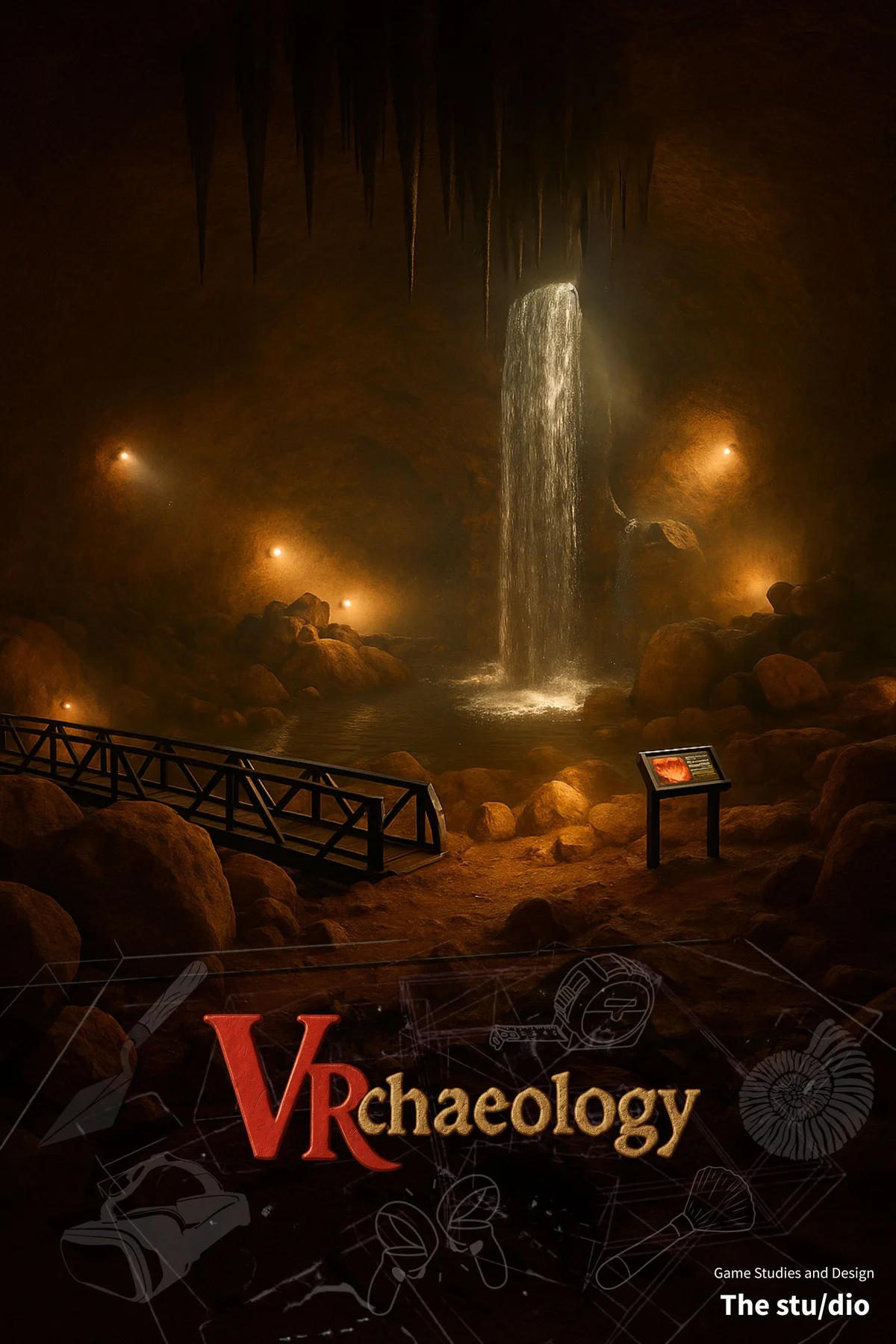
Click to lift or return the disc. When lifted, drag or use arrow keys to rotate it. Home returns it to the tray.
3D model credits
Meta Quest 3 by Elin, CC BY 4.0. Controllers by WebXR Input Profiles contributors, MIT license. Models scaled, positioned, lit, and animated for this presentation.
Learning through fieldwork
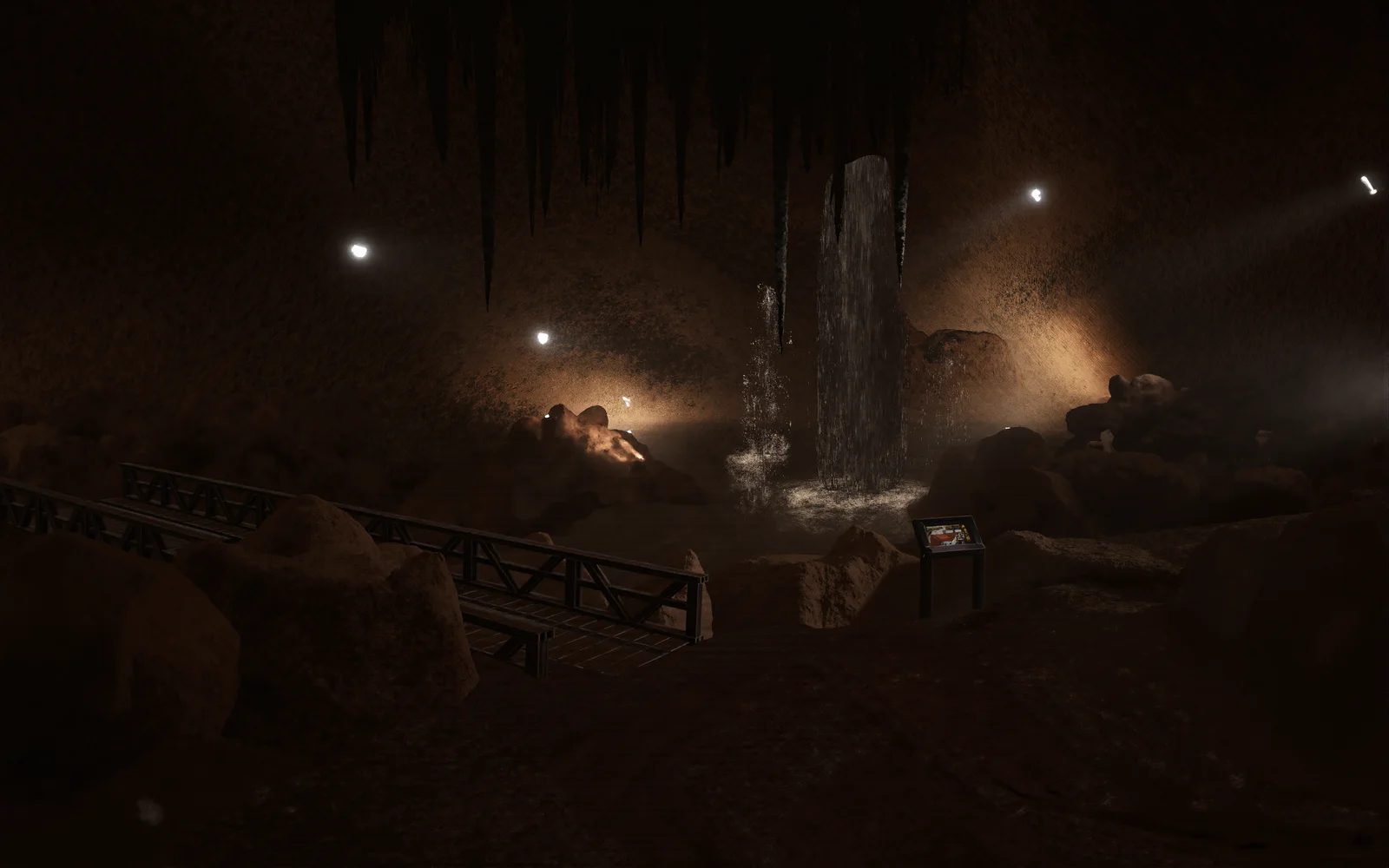
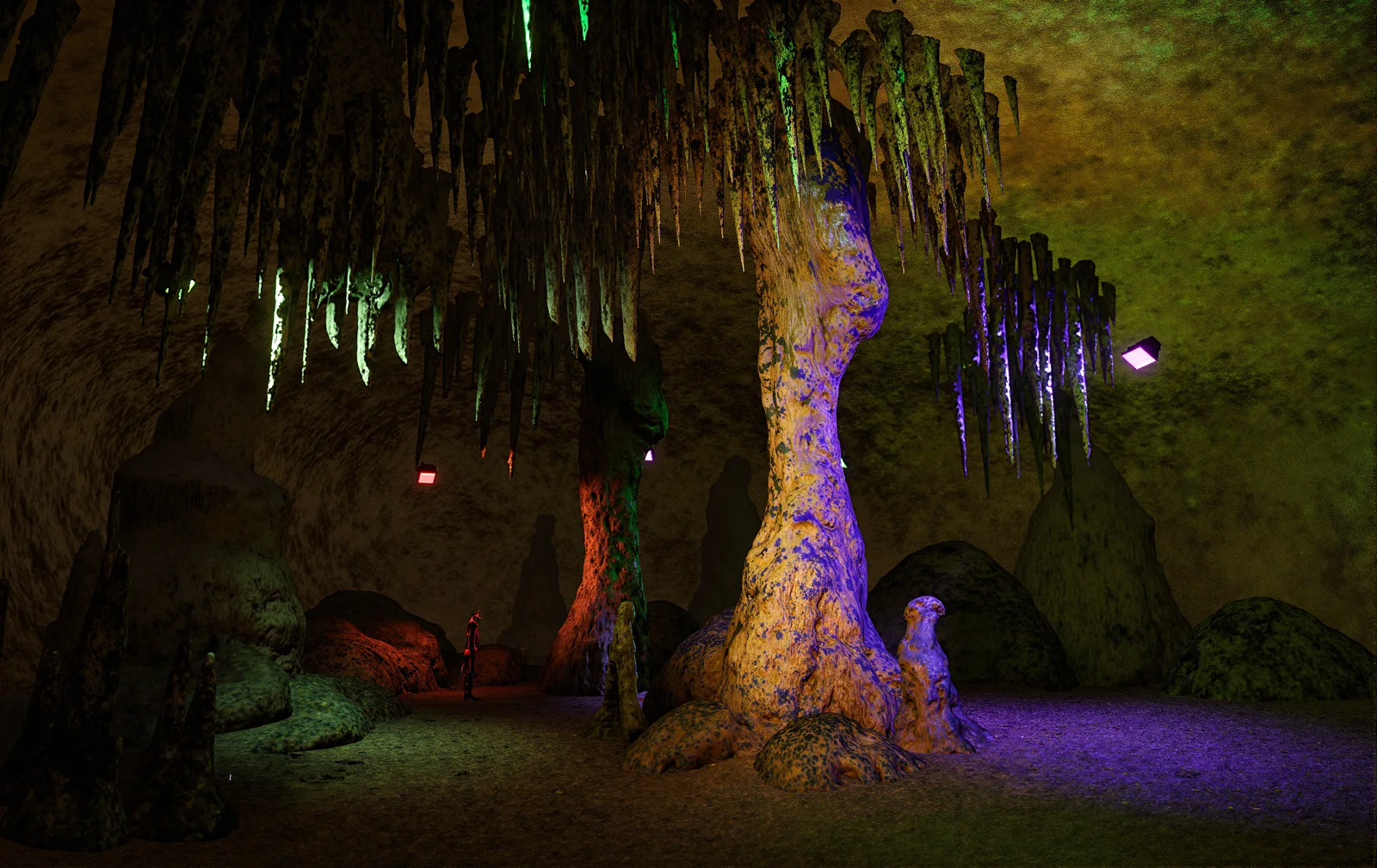
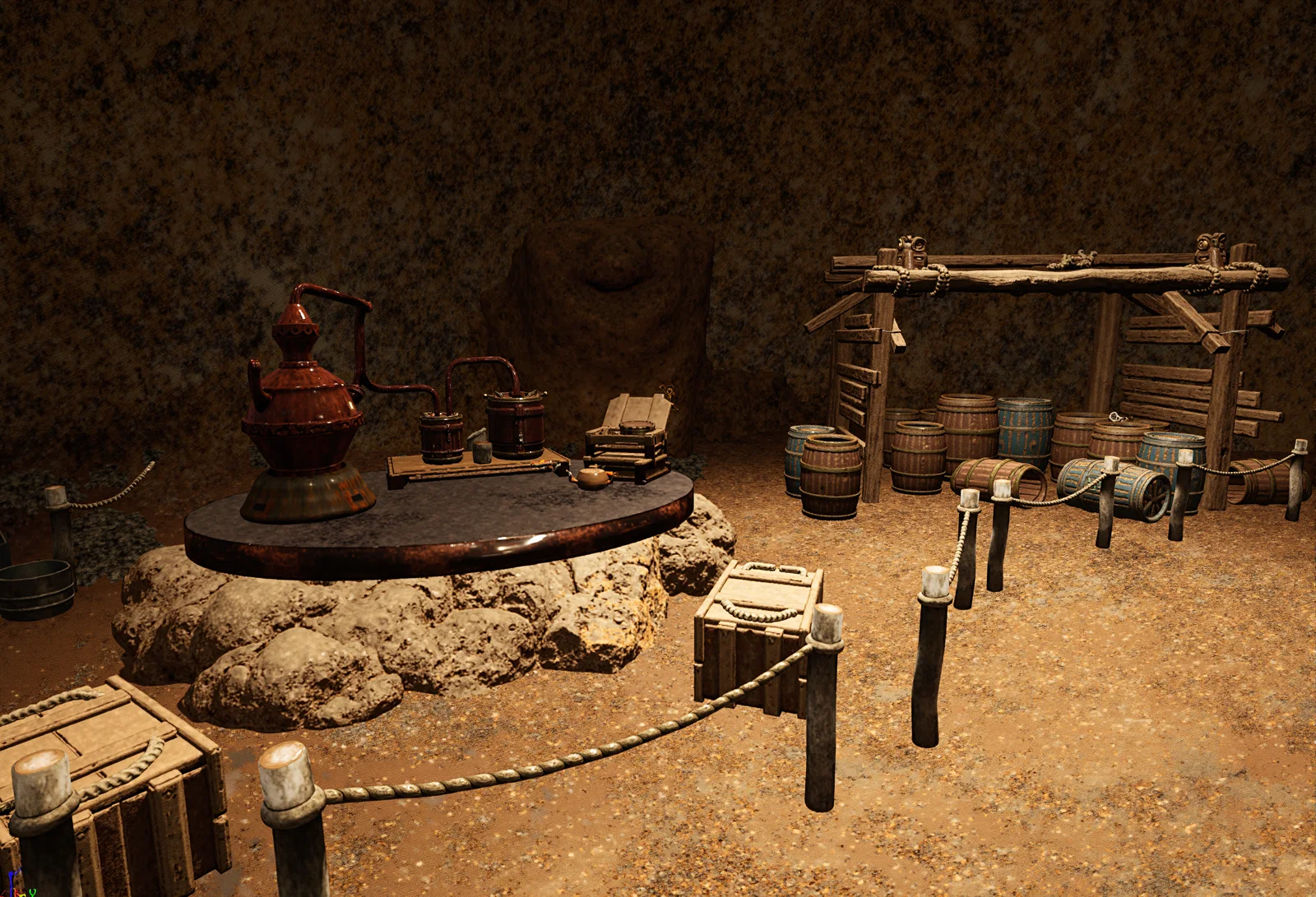
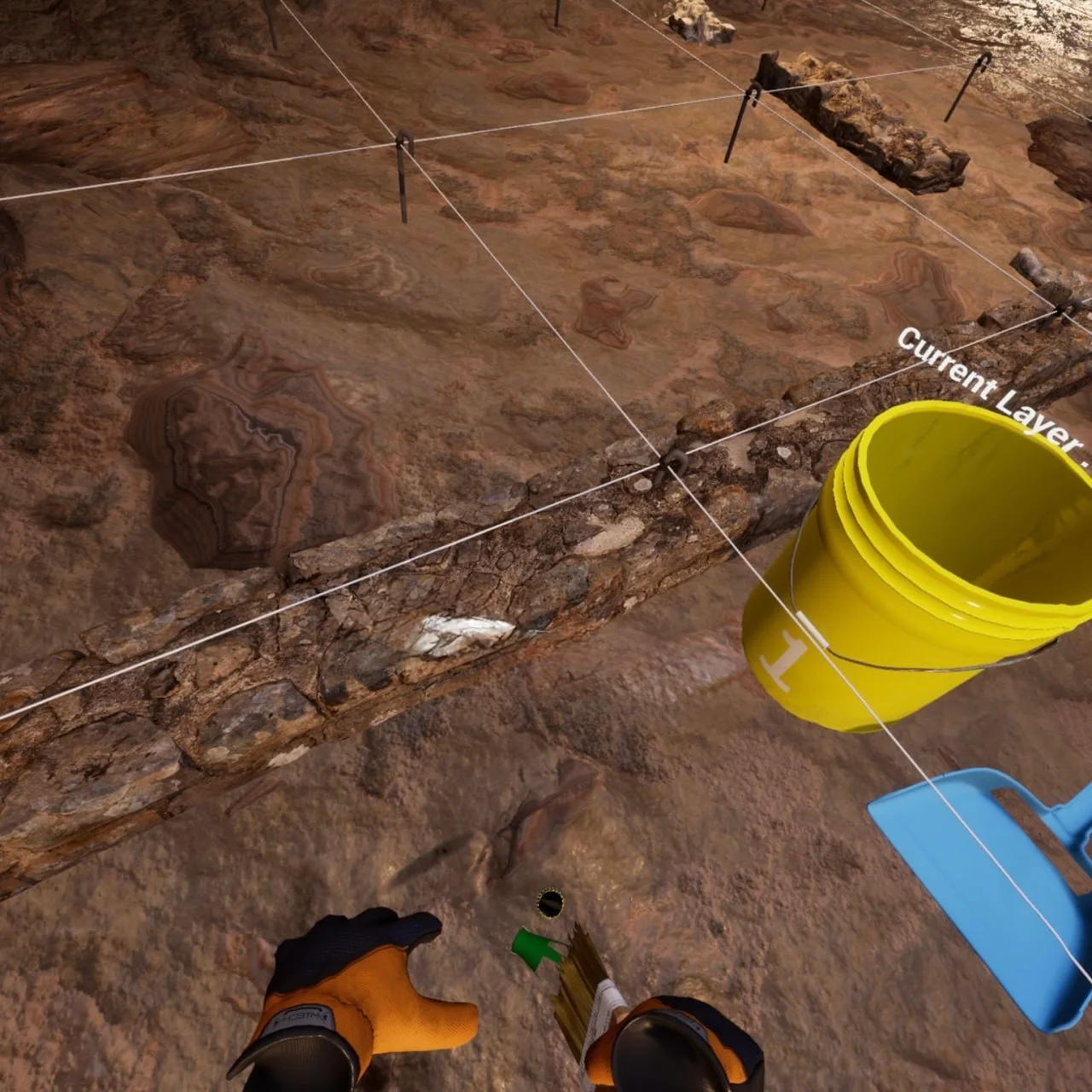
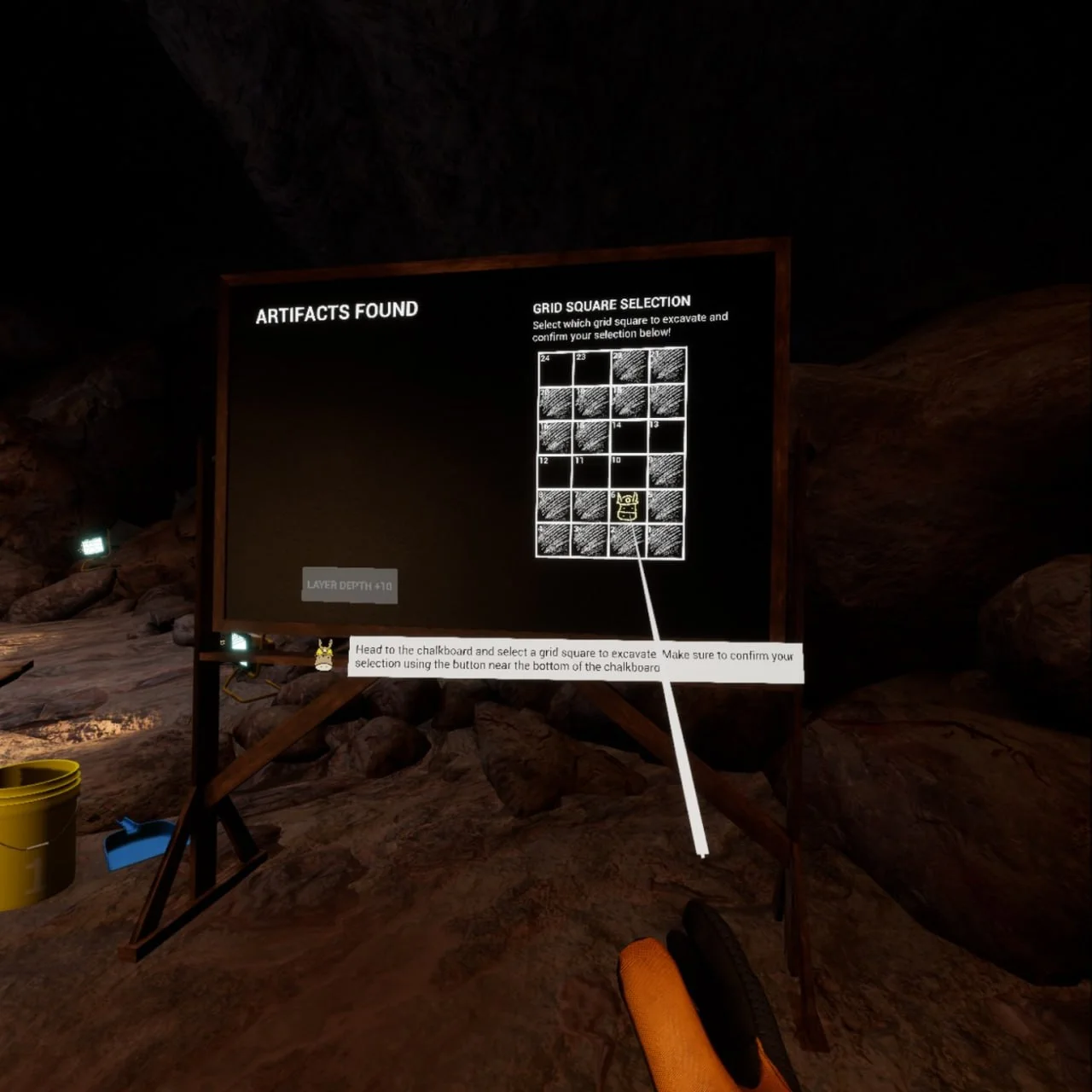
Students learn archaeological field methods in an immersive virtual cave: setting up grids, locating and excavating artifacts, mapping features, photographing finds, and running lab analyses. Built in Unreal Engine, VRchaeology connects classroom learning with field practice.
Development continues at the Game Studies and Design (GSD) Stu/dio, with new labs and improvements to the experience. GSD 282: VRchaeology, Spring 2027, was co-created by Laura Shackelford and Sepehr Vaez Afshar. The project is supported by NSF awards 1736235 and 2021460, and Epic MegaGrants.
Accessibility research, 2020–2022
With NSF support, the project investigated how virtual reality could make archaeology and other field-based sciences more accessible to college students who use wheelchairs. The study sought perspectives from students with mobility or physical disabilities to inform the experience’s accessibility. This is a historical research strand, not an active recruitment announcement. NSF award 2021460 · Original project description.
Classroom & fieldwork archive
Selected photographs from the former lab website. Dates are included where recorded. Original gallery
Scroll horizontally to see more images
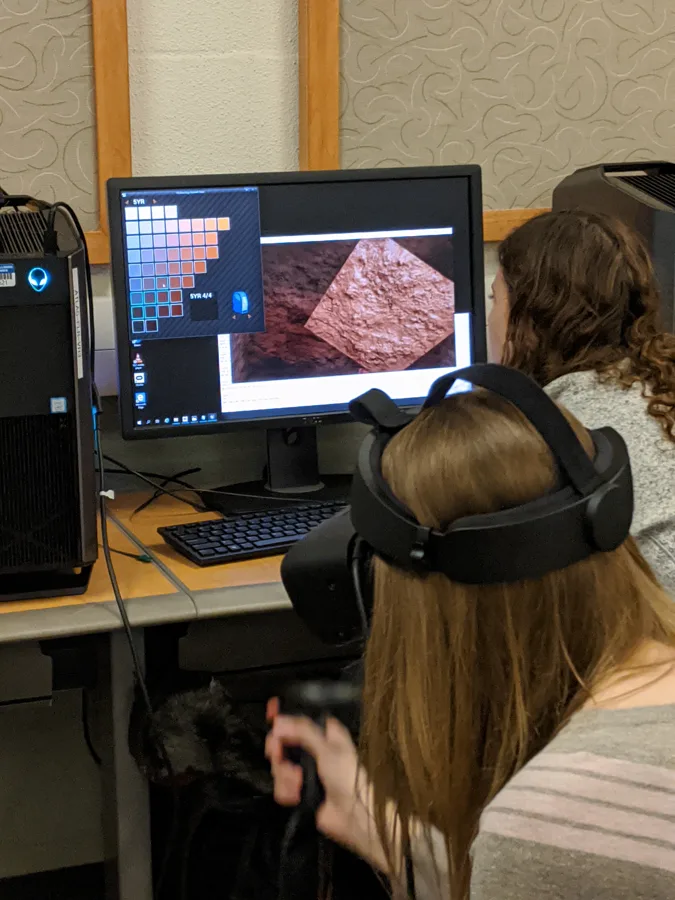
Fall 2019 lab experience.
View full image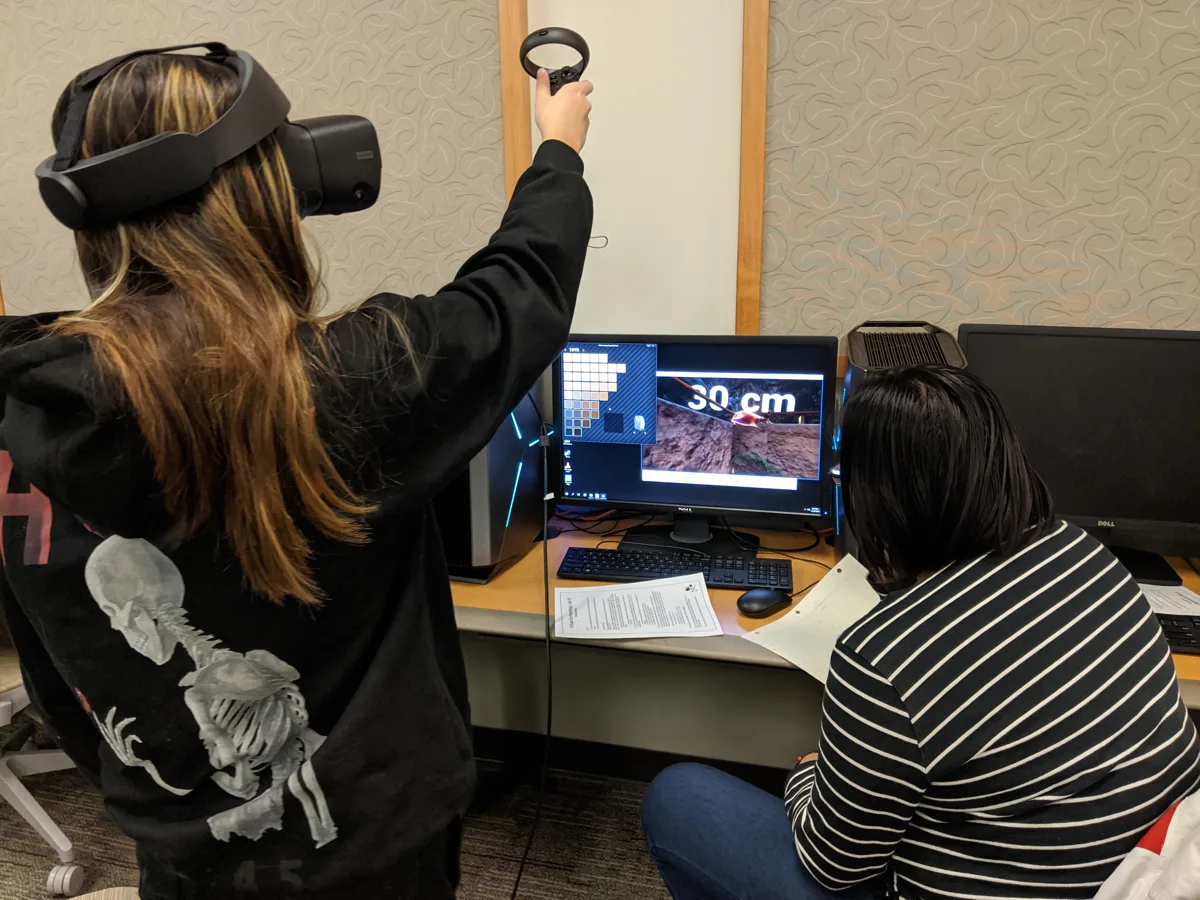
Fall 2019 lab experience: using VR at a workstation.
View full image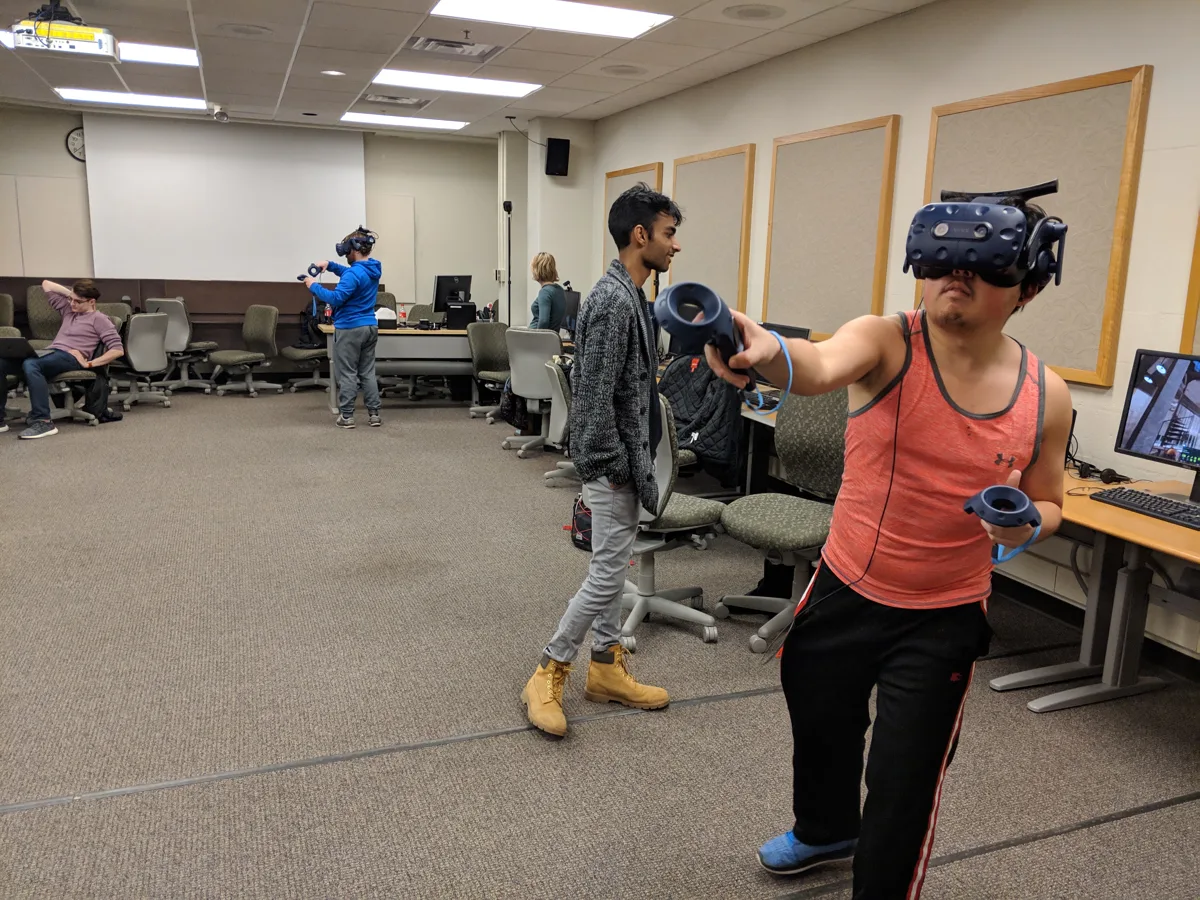
A lab session documented on the former VRchaeology website; date not recorded.
View full image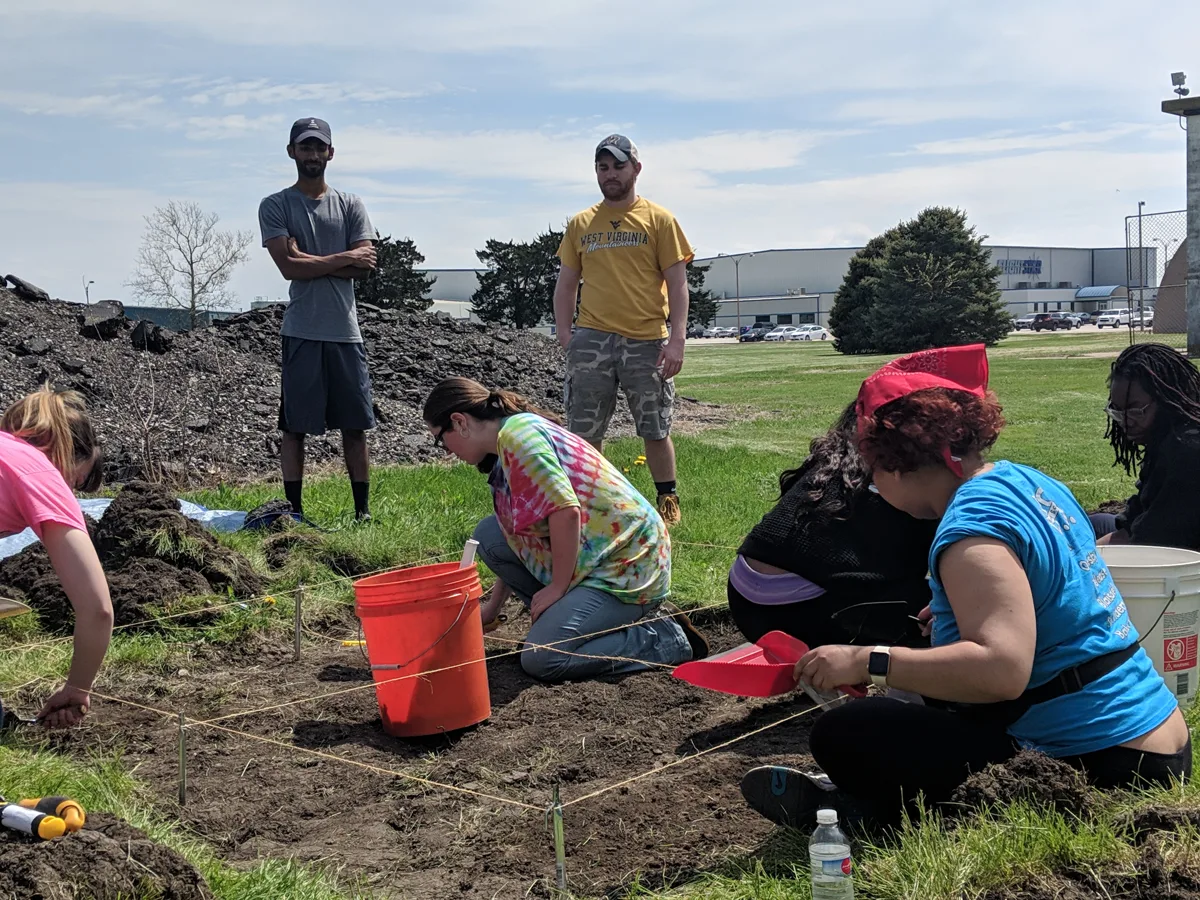
Outdoor fieldwork documented in the former lab gallery; date not recorded.
View full imageEarly environments & interactions
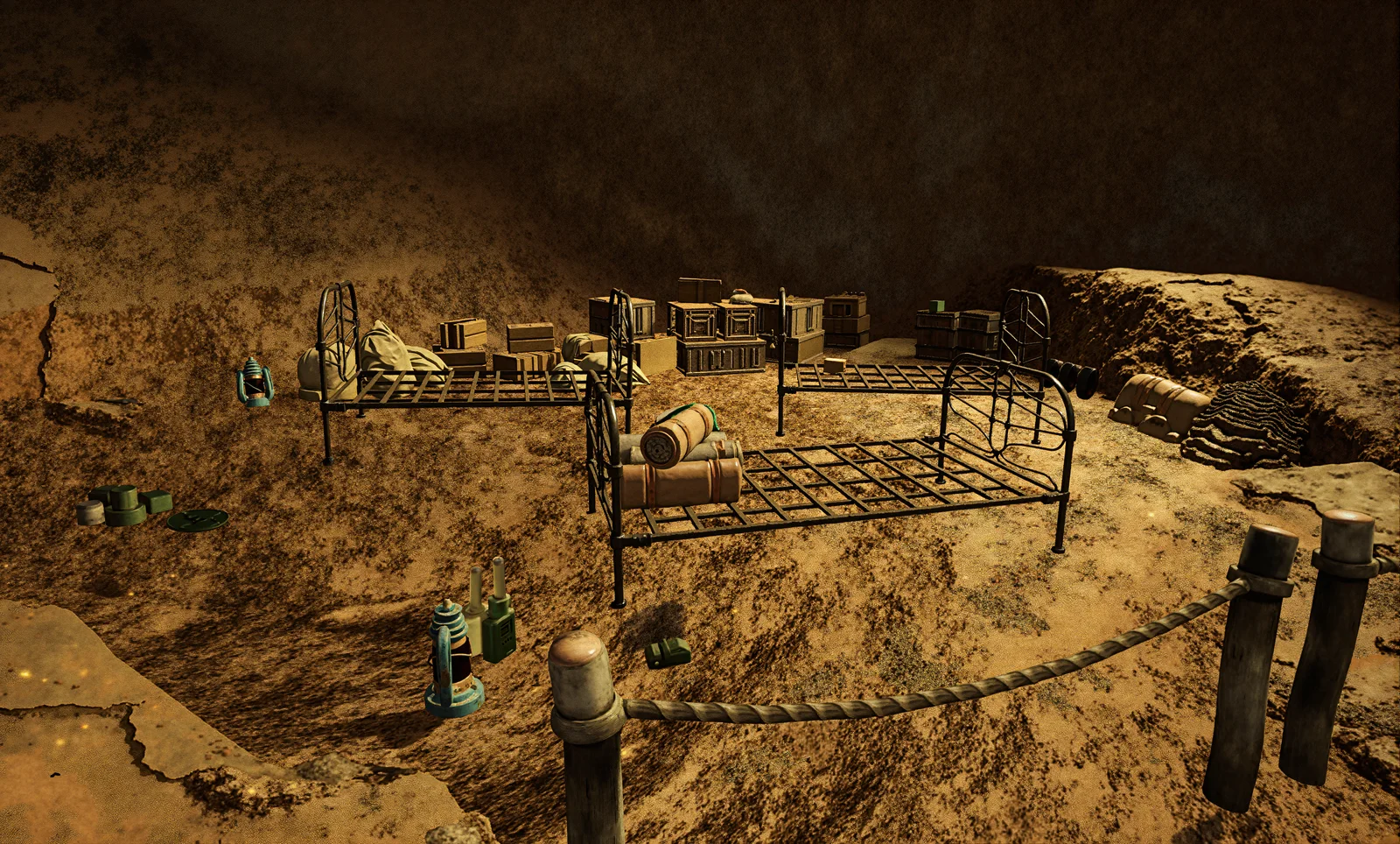
Historical development images, separate from the current game shown above. Animations are silent and play only when selected. Original gallery
Scroll horizontally to see more images
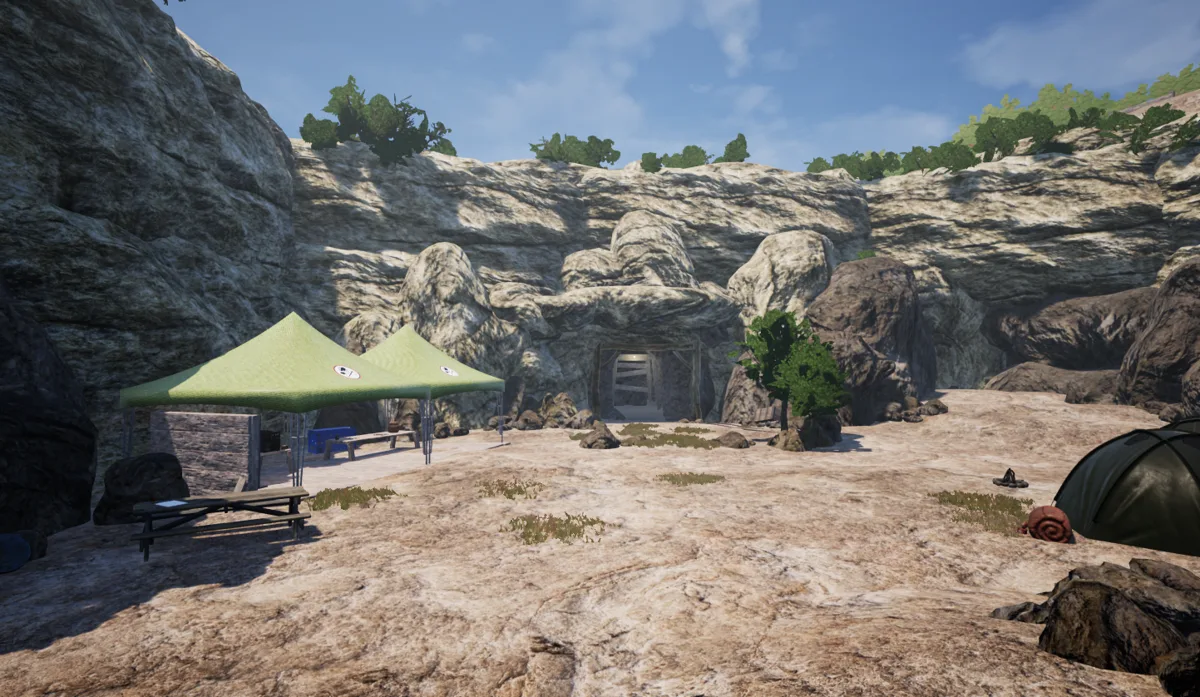
An early VRchaeology field-camp environment.
View full image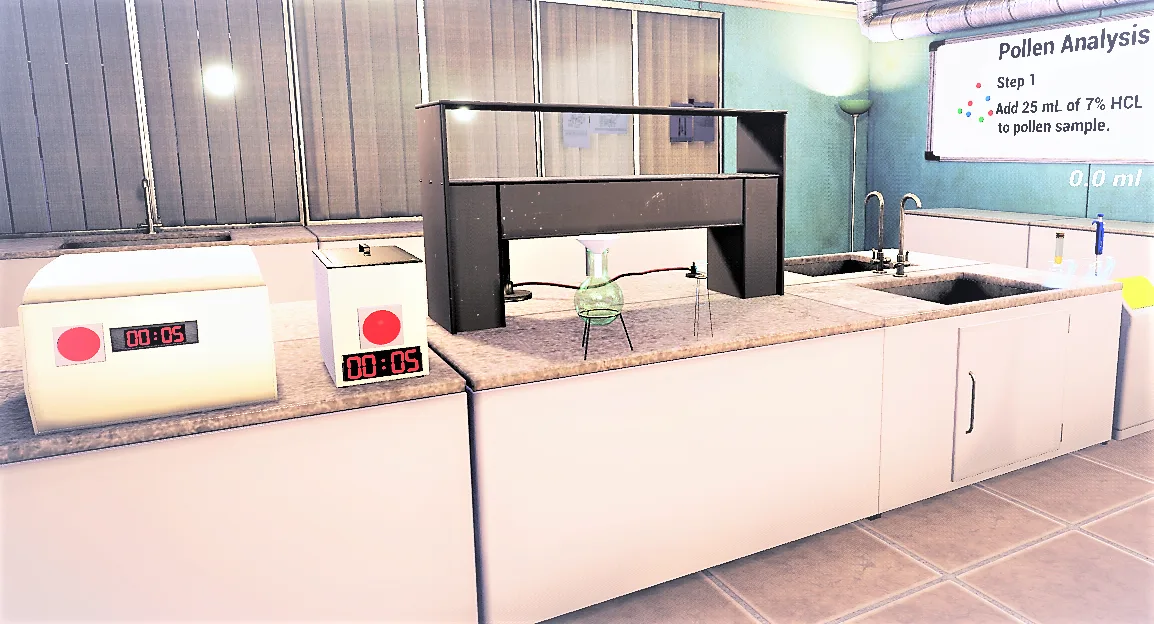
An early virtual lab workspace.
View full image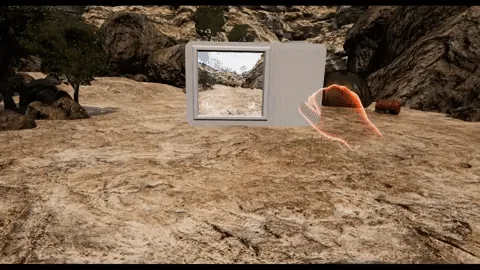
An early camera interaction demonstration. Silent animation.
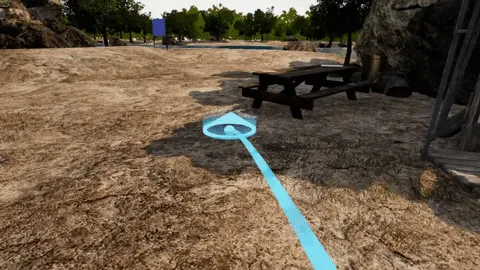
An early teleport movement demonstration. Silent animation.
Project credits
Sponsor
- Dr. Laura Shackelford
Co-PI (NSF Grant)
- Dr. Wen-Hao David Huang
Associate producer
- Sepehr Vaez Afshar
Project manager
- Gabriel Wozniak
Additional project management support
- Om Mistry
- Pranav Shah
Programming
- Anish Gupta
- Praneeth Rangamudri
- Nick Simons
- Aashish Subramanian
Additional programming support
- Zach Krauter
- Ezra Schur
- Gloria Xiao
- Weijia “Charlie” Zhang
Design
- Madison Rosenberger
3D art
- Nancy “Nan” Kang
- Dominic Larrieu
- Xiaoxu “Johnny” Lyu
- Yiwen “Tiffany” Wu
Additional 3D art support
- Karan Ganesh
- Mengzhen Yu
2D art
- Synthia Cao
- Pengkun “Daniel” Mao
- Ruoheng Yang
Music
- Adrian Pawlikowski
Sound design
- Aubree Gray
Voice acting
- Olive Wang
Stu/dio leads
- Daniel Cermak (Director)
- Robbie Sieczkowski (Producer)
- Max Yang (Programming Lead)
- Aditya Bhave (Art Lead)
- Rodrigo Hidalgo Amat Y Leon (Design Lead)
- Sarvin Eshaghi (Quality Assurance Lead)
- Olive Wang (Accessibility Lead)
Archaeology content support
- Emma Verstraete
- Alexandra Zachwieja
Publications
Conference papers
Relationships between cognitive loads and motivational support in a virtual reality game-based learning system for teaching introductory archaeology
A study of cognitive load and motivational support in a VR archaeology learning environment, drawing on survey responses from 106 participants.
Presentations
Invited talks
VRchaeology talk (Laura Shackelford) to the VR Club
Conference talk
Motivational processing in a game-based VR learning system for teaching introductory archaeology
Conference talk
Virtual archaeology: the efficacy of virtual reality for social science education
Conference talk
Digitally-empowered learning: teaching archaeology through VR and game-based learning
Funding
Grants
EXP: Social science education through virtual reality simulation of an archaeological research site (NSF 1736235)
Supported from 2017 to 2020.
Grants
Increasing accessibility to field-based sciences for college students using wheelchairs (NSF 2021460)
Supported from 2020 to 2022.